Introduction
For commercial buildings, motor selection is no longer a purely mechanical decision—it is a strategic energy and financial decision. Facility managers and HVAC consultants are under increasing pressure to reduce operating costs, carbon emissions, and compliance risk, while maintaining occupant comfort and system reliability.
Since electric motors account for up to 70% of HVAC system electricity consumption, selecting high-efficiency motors can deliver measurable energy savings, rapid ROI, and long-term asset value. This article provides a , data-driven guide to HVAC motor selection, supported by real-world case studies and ROI calculations.
Why Motor Selection Is a Critical Decision for Commercial HVAC Systems
From a facility management perspective, HVAC motors influence:
- Annual energy expenditure
- Preventive maintenance schedules
- Equipment reliability and downtime risk
- Capital planning and retrofit ROI
For HVAC consultants, motor efficiency directly impacts:
- Energy modeling results
- ASHRAE 90.1 compliance
- LEED and sustainability outcomes
- Client lifecycle cost performance
Selecting premium-efficiency motors ensures systems operate efficiently across real-world load profiles, not just at nameplate conditions.
Motor Efficiency Standards and Regulatory Context
Modern HVAC projects increasingly specify motors compliant with:
- ASHRAE Standard 90.1
- International Electrotechnical Commission (IEC) IE3 / IE4 efficiency classes
- Regional minimum energy performance standards (MEPS)
For consultants, specifying IE3, IE4, or NEMA Premium® motors is now considered baseline best practice for commercial HVAC systems.
High-Efficiency Motor Technologies Used in HVACR
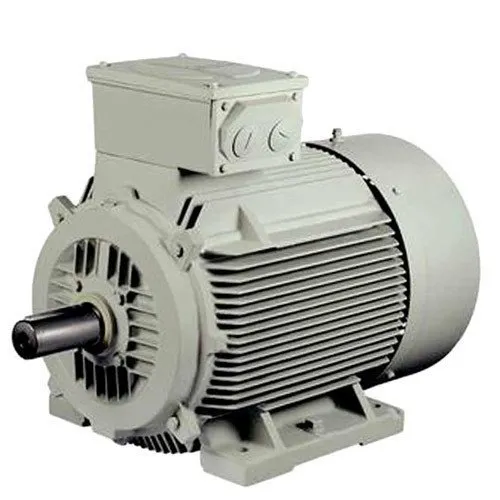
IE3 / NEMA Premium Induction Motors
- Proven reliability
- Suitable for pumps, fans, and cooling towers
- Excellent performance with VFDs
Electronically Commutated (EC) Motors
- Integrated speed control
- Superior part-load efficiency
- Ideal for AHUs and fan coil units
Permanent Magnet Synchronous Motors (PMSM)
- Highest efficiency at variable loads
- Common in chillers and VRF systems
- Lower lifecycle energy consumption
Real HVAC Case Studies with ROI Calculations
Case Study 1 – Commercial Office Building (AHU Fan Motors)
Facility Profile
- 15-story commercial office building
- 6 air handling units
- Existing motors: IE1, 15 kW each
- Operating hours: 6,000 hours/year
Upgrade Implemented
- Replaced with IE4 high-efficiency motors
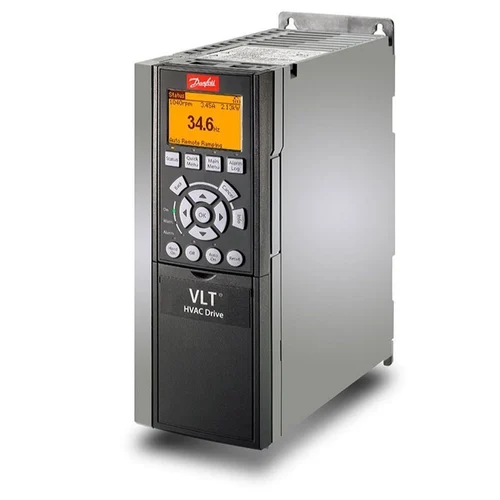
- Added VFDs for demand-based airflow
Energy & Cost Analysis
| Parameter | Before | After |
|---|---|---|
| Annual Energy Use | 540,000 kWh | 390,000 kWh |
| Annual Energy Cost (@ $0.12/kWh) | $64,800 | $46,800 |
| Annual Savings | $18,000 |
Investment Cost
- Motors + VFDs: $42,000
ROI
- Simple Payback: 2.3 years
- 10-Year Net Savings: >$135,000
Result :
Most savings were achieved during part-load operation, reinforcing the importance of motor-VFD pairing.
Case Study 2 – Hospital Chilled Water Pump System
Facility Profile
- 24/7 hospital operation
- Three primary chilled water pumps
- Existing IE2 motors, 30 kW each
Upgrade Implemented
- IE4 motors with VFDs
- Pump re-selection based on actual load profile
Results
| Metric | Value |
|---|---|
| Energy Reduction | 28% |
| Annual Energy Savings | 92,000 kWh |
| Annual Cost Savings | $13,800 |
| Capital Investment | $36,000 |
| Payback Period | 2.6 years |
Facility Manager Benefit:
Lower heat rejection reduced chiller load, generating secondary energy savings not initially modeled.
Case Study 3 – Data Center CRAH Units Using EC Motors
Facility Profile
- Medium-scale data center
- 10 CRAH units
- Continuous operation (8,760 hrs/year)
Upgrade Implemented
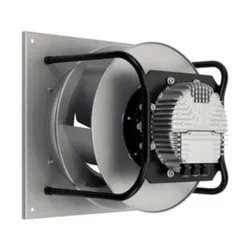
- Replacement of belt-driven AC motors with EC plug fans
Performance Impact
- Energy savings: 35–45%
- Noise reduction: 6–8 dB
- Maintenance reduction: eliminated belts and pulleys
ROI
- Payback achieved in under 18 months
Lifecycle Cost Perspective for Facility Managers
For HVAC motors, energy cost dominates lifecycle cost:
- Initial purchase cost: ~3–5%
- Energy cost over 15 years: ~90%
- Maintenance and downtime: ~5–7%
High-efficiency motors significantly reduce total cost of ownership (TCO), making them a financially sound capital investment.
Motor Selection Best Practices for HVAC Consultants
Specify for Load, Not Nameplate
Design for actual operating conditions, not worst-case assumptions.
Always Evaluate Motor + Drive as a System
Motor efficiency alone is insufficient—consider system efficiency.
Document Energy and Carbon Savings
Clients increasingly require quantified savings to meet ESG and sustainability targets.
Align with Long-Term Asset Strategy
Motor upgrades should support:
- Planned HVAC retrofits
- Digital energy monitoring
- Decarbonization roadmaps
Check Out our Blog
Frequently Asked Questions (FAQ)
Q1: What is the typical ROI for high-efficiency HVAC motors?
Most commercial HVAC motor upgrades achieve ROI within 1.5 to 3 years, depending on operating hours and electricity cost.
Q2: Do high-efficiency motors improve HVAC reliability?
Yes. Lower heat losses reduce winding stress, extending motor life and reducing failures.
Q3: Are EC motors suitable for large commercial HVAC systems?
EC motors are increasingly used in large AHUs and data centers due to superior part-load efficiency and controllability.
Q4: How do high-efficiency motors support sustainability goals?
They reduce electrical demand, lower carbon emissions, and help buildings meet ESG, LEED, and net-zero targets.
Call to Action
Are you planning an HVAC retrofit, energy audit, or new system design? Subscribe to our expert HVAC blog or contact our team for professional guidance on motor selection, ROI analysis, and energy-efficient HVAC solutions.