Introduction
Energy-saving opportunities in AHUs are a major focus for engineers and facility managers. Air Handling Units consume a large share of HVAC energy. When they run inefficiently, they increase fan power, heating load, and cooling demand. This guide explains the most effective ways to save energy in AHUs while following ASHRAE recommendations.
1. Reduce Fan Energy Use
a. Add Variable Frequency Drives (VFDs)
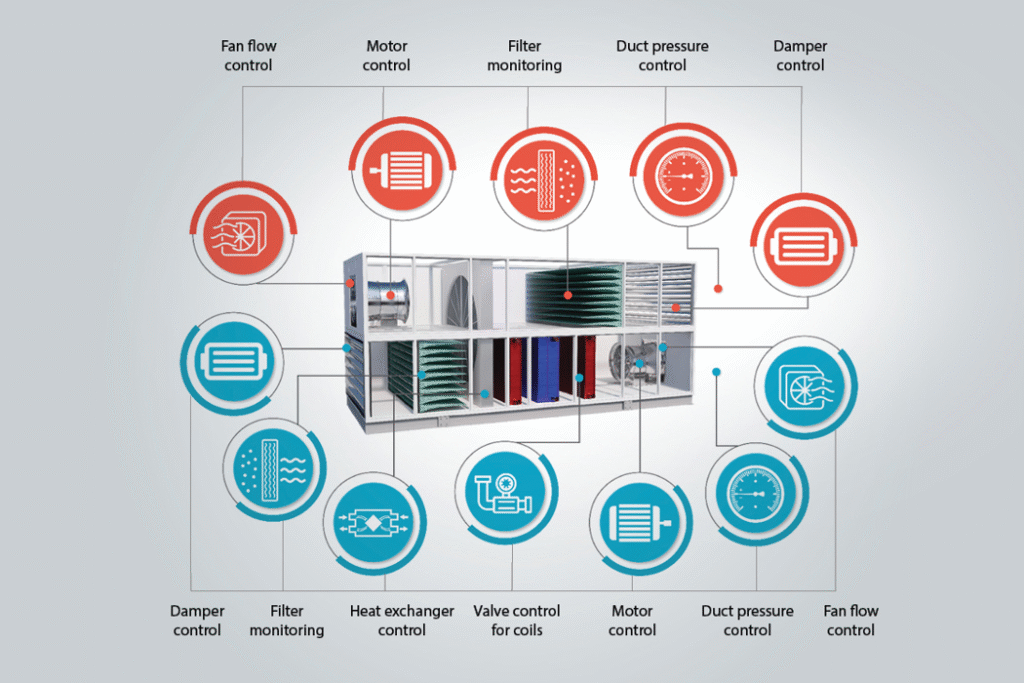
VFDs are one of the most effective energy-saving opportunities in AHUs. They allow fans to slow down when the building load is low. Even a 20% reduction in airflow can cut fan energy by nearly 50%. This happens because fan power follows the cube-law relationship.
To get the best results, use:
- Static pressure reset
- Proper VFD tuning
- Alarm integration with the BAS
b. Lower Pressure Drops
High pressure drops cause fans to work harder. ASHRAE recommends reducing unnecessary resistance across coils, filters, and ducts.
A few practical steps include:
- Use low-pressure-drop filters with the right MERV rating
- Keep coils clean to maintain good heat transfer
- Improve duct layout to reduce friction losses
These actions reduce fan power and improve overall AHU efficiency.
2. Add Energy Recovery Ventilation (ERV)
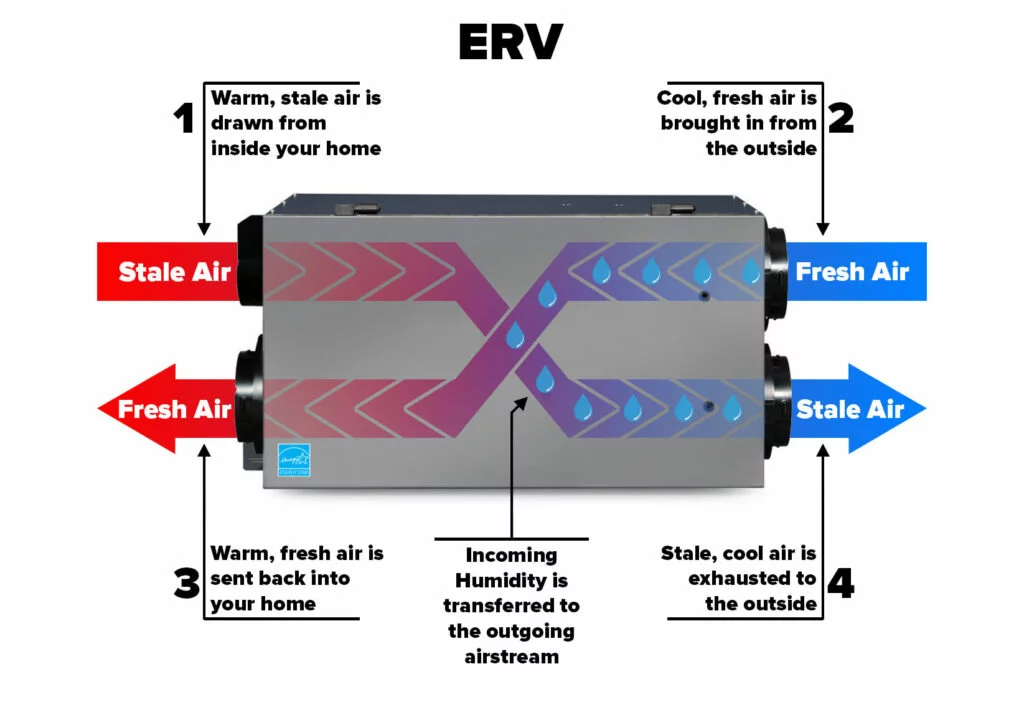
Ventilation loads increase energy use in HVAC systems. Energy recovery wheels and heat exchangers help reduce heating and cooling loads by transferring heat between exhaust and supply air.
This can deliver 20% to 40% energy savings, especially in buildings with high outdoor air requirements. This strategy supports the intent of ASHRAE 62.1.
3. Improve Temperature and Humidity Control
a. Use Supply Air Temperature Reset (SAT Reset)
SAT reset is a key control strategy from ASHRAE 90.1. It adjusts the supply air temperature based on the load. During light cooling conditions, the system raises the SAT. This reduces reheat energy and lowers chiller demand. It also helps keep indoor comfort within ASHRAE 55 limits.
b. Optimize Dehumidification
Poor moisture control wastes energy, especially in humid climates.
To save energy:
- Use hot-gas reheat for DX units
- Add heat-recovery coils
- Control reheat based on humidity demand
These steps reduce unnecessary cooling and heating cycles.
4. Choose the Right Filters
Filtration affects indoor air quality and energy use. Higher MERV filters can increase pressure drop, but modern low-pressure-drop filters balance IAQ and energy savings.
Good practices include:
- Monitor filter pressure with sensors
- Replace filters when the pressure rises, not on a calendar schedule
- Select filters that meet ASHRAE 52.2 requirements
This reduces both energy use and fan strain.
5. Use Smarter Building Controls
a. Add Demand-Control Ventilation (DCV)
DCV uses CO₂ or occupancy sensors to reduce outdoor air when the building is not fully occupied. This lowers the load on heating and cooling systems. It also remains compliant with ASHRAE 62.1.
b. Improve Economizer Control
An economizer provides free cooling when outdoor air conditions are favorable.
To save energy:
- Use differential enthalpy control
- Prevent simultaneous heating and cooling
- Check dampers regularly
Economizers can significantly reduce cooling energy in many climates.
c. Add Proper Scheduling
Many buildings run AHUs overnight without need.
A well-designed schedule should include:
- Occupied and unoccupied modes
- Night purge when outdoor air is cool
- Warm-up and cool-down optimization
This reduces both fan and chiller runtime
6. Improve Mechanical Efficiency
a. Maintain AHU Coils
Dirty coils reduce heat transfer and increase energy use. Clean coils improve system efficiency and lower chilled or hot water demand. Regular coil cleaning is an easy win.
b. Seal AHU Air Leaks
Air leaks reduce system performance. They also cause incorrect airflow volumes.
To fix leaks:
- Repair panel gaps
- Replace worn gaskets
- Inspect insulation and duct joints
This is a low-cost way to reduce wasted energy.
7. Commission AHUs Regularly
Commissioning helps ensure AHUs operate as designed. ASHRAE recommends both initial and ongoing commissioning.
Key checks include:
- Airflow verification
- Control sequence testing
- Sensor calibration
- Economizer and ERV performance validation
Buildings often recover 10% to 20% efficiency through proper commissioning.
8. Summary Table
| Strategy | Energy Impact | ASHRAE Reference |
|---|---|---|
| VFDs | High | 90.1 |
| Lower pressure drop | Medium | 62.1 & 52.2 |
| ERV | High | 62.1 |
| SAT reset | Medium | 90.1 |
| DCV | Medium–High | 62.1 |
| Economizer optimization | High | 90.1 |
| Commissioning | High | Guideline 0 & 1 |
This table helps highlight the best energy-saving opportunities in AHUs.
External Link
ASHRAE 90.1 Energy Standard: https://www.ashrae.org
FAQ
1. What are the best energy-saving opportunities in AHUs?
VFDs, ERVs, better filtration, and improved controls offer the most savings.
2. Does an ERV always reduce energy use?
Yes, especially in buildings with high ventilation requirements.
3. How often should AHUs be commissioned?
Every 2–3 years or after major system changes.
4. Does a higher MERV filter increase energy use?
Not always. Many modern filters provide high MERV performance with low pressure drop.
5. Why is SAT reset important?
It reduces reheat and cooling energy while maintaining comfort.
If you want more HVACR career guides, energy efficiency insights, or industry updates, stay connected with TheHVACLab or contact our team for expert support.